 Trymivo
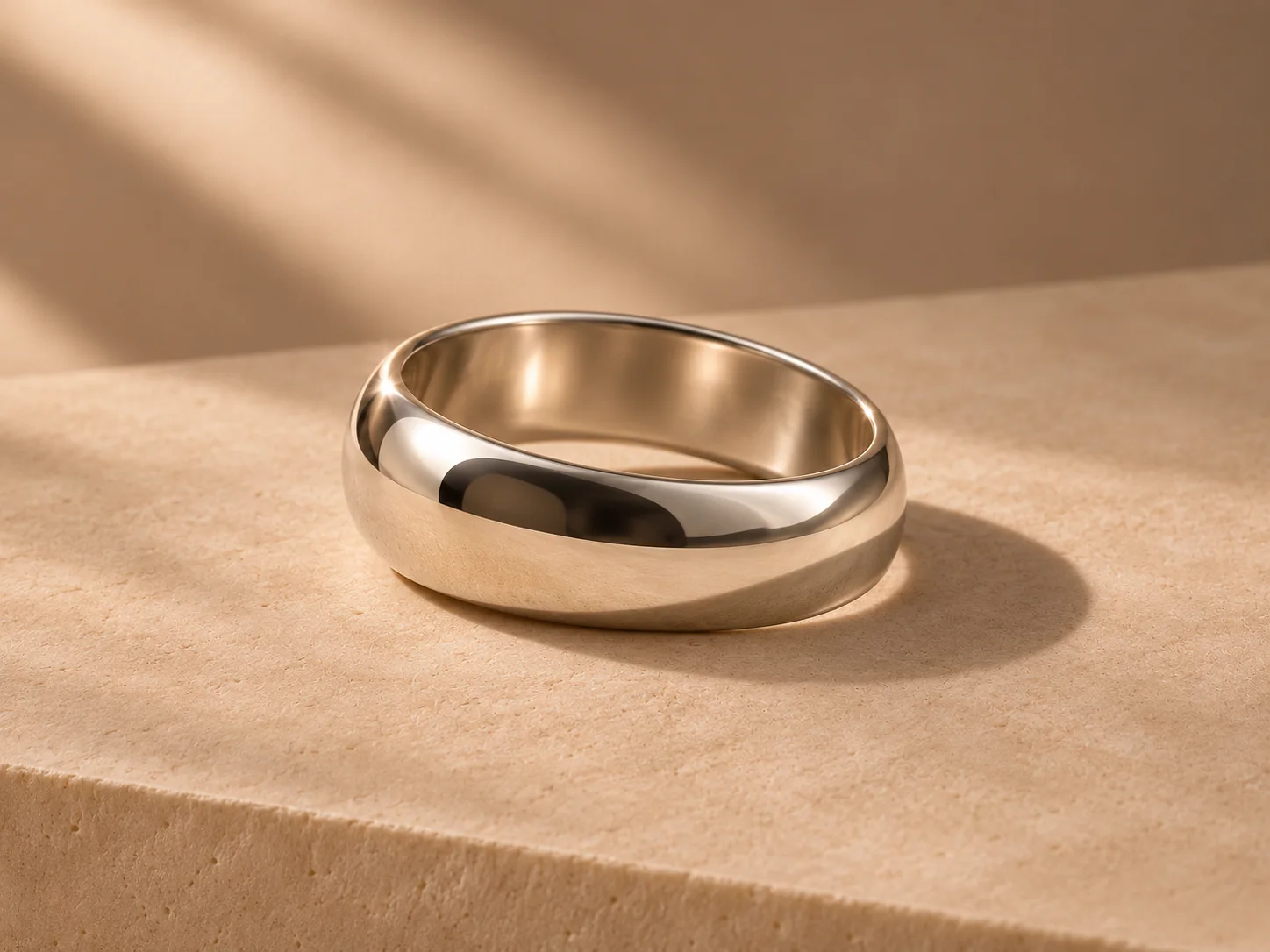
Measure the inside
Inner diameter is the straight-line distance across the opening of a round ring. It does not include the thickness of the metal. Measuring the outside gives a larger value and can point a shopper to the wrong chart row.
The relationship between the two
For a circle, circumference equals diameter multiplied by pi. An inner diameter of 17.3 mm corresponds to about 54.35 mm of circumference. That is an arithmetic example, not a universal size label: the label must come from the store’s chart.
A paper strip measures circumference
Wrap a narrow strip around the intended finger and mark where it overlaps. Once flattened, the distance between the marks represents the circumference. Avoid pulling it tight and check that the loop can pass over the knuckle. Small differences in technique can change the result.
Why screen calibration matters
A CSS pixel is not a fixed physical length across phones. Trymivo’s development flow uses the 53.98 mm short edge of a standard ID-1 card to establish a screen scale. Changing orientation, browser zoom or device settings may invalidate that scale.
Use the result as a starting point
The app compares the measurement with the store’s chart. Finger width alone is not used to infer circumference. Physical accuracy across real devices has not been established, so repeat the measurement and confirm with a physical ring sizer before ordering.
Put useful guidance on your product page.
Explore Ring Sizer’s chart controls, targeting and measurement methods.
Explore Ring Sizer →